
Our Founder
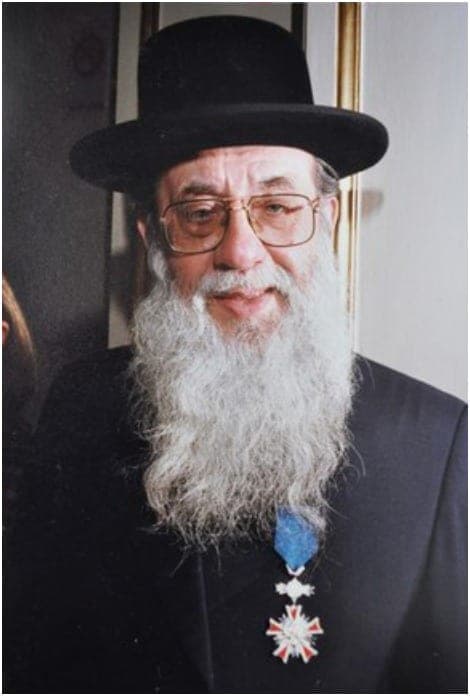
Rabbi Mendel Reichberg, Z”l
He once had to beg people to make a minyan in Lizensk. Today the trip he started draws thousands every year.
Bochnia to Krakow, the camps, Boro Park, and then, year after year, back to the kevarim of Poland with a suitcase of kvittlach that were not his own.
- 1974
- The Bobover Rebbe returns to Poland
- 1975
- Eight men travel to Lizensk
- 1997
- Order of Merit, Republic of Poland
- Today
- Thousands make the trip each year
Rabbi Mendel Reichberg, Z”l, was born in Bochnia, Poland, and learned in yeshivah in Krakow. As a young man he visited the kever of the Noam Elimelech in Lizensk, a trip that stayed with him for the rest of his life. He went on to survive the ghetto and the camps of the Holocaust before rebuilding, from nothing, in the United States, where he opened a small travel agency and remained closely tied to the Bobover community.
Through the 1950s and ’60s, he made quiet, solitary trips back to Poland to daven at the kevarim there, hanging notices in the Boro Park shtiblach beforehand so anyone who wanted could hand him a kvittel to bring along.
A journey behind the Iron Curtain
In the summer of 1974, the Bobover Rebbe asked his trusted travel agent to do something that had never really been done: arrange a trip to Communist Poland so the Rebbe could visit the tziyun of his ancestor, the Divrei Chaim of Sanz. It was anything but simple. Every traveler had to hand over a passport for a visa application at the Polish embassy, first in Washington and later a consulate in Manhattan. The process took weeks, with hotels prepaid through the government and a driver and secret police escort assigned to the group at all times.
Rabbi Reichberg made it happen for some 120 travelers, including his own sons. It was the Rebbe’s first time back in Bobov since his family had been forced out during the war, and he walked its streets reciting Tehillim, met along the way by elderly townspeople who still remembered him from decades before. He and his brother searched the yard of their old home for a menorah and stick their grandfather had buried there before fleeing, but a house had since been built on the spot, and it was never recovered.
Renewing the custom
The following Adar, Rabbi Reichberg decided that he wanted to organize a trip of his own, to Lizensk, for the yahrtzeit of the Noam Elimelech. Calling around, he found almost no one willing to go; many survivors were still too afraid to set foot in Poland again. He went anyway, with a group of just eight. The next year it was twenty. Then a hundred. Then thousands, every single year since.
Those early trips ran under constant watch, with kvittlach opened and inspected and davening observed from a distance, until, over time, the Polish government saw the group for exactly what it was: people who had come only to pray. The visa requirement was eventually dropped altogether. In 1997, the Republic of Poland awarded Rabbi Reichberg its Order of Merit for his role in reviving tourism and preserving Jewish heritage sites across the country.
Protecting what was left
Along the way, Rabbi Reichberg saw how many gravesites sat neglected, some at real risk of being built over entirely. At his son’s urging that the next generation would lose them for good, he had gates and fences built and structures restored at the kevarim in Riminov, Koznitz, Lancut, and Ropshitz. Every year during the Aseres Yemei Teshuvah, even as he got older, he traveled to Europe alone with a stock of ten-day candles, so that no shul or kever would be left without a lecht burning through Yom Kippur.
His sons, Mayer and Wolf, carried the agency forward, and Reichberg Travel remains a family business today, now with women’s tours, professional guides, and organized Shabbos programs that his early groups, packing their own portable kitchen, could only have dreamed of. Every traveler, whether headed to Lizensk or to a five-star resort, is still treated like family.
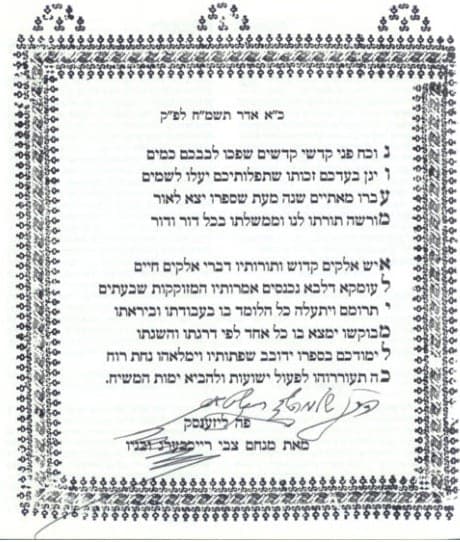
In his own hand
What he left behind was never only itineraries
He wrote letters. He carried other people’s kvittlach. He paid for fences around kevarim that had no one else to speak for them, and he lit candles in shuls where nobody would see them burn. The agency his sons run today is the ordinary, working part of all that: flights, hotels, buses, guides, and someone on the phone who knows where you are going and why.